Showing posts with label sports massage. Show all posts

Monday, 20 May 2019

Benefits of Sports Massage and what it actually does for you...


Ever been told that sports massage breaks down scar tissue and gets rid of your muscle knots? Yeah this is not entirely true! It is impossible for our thumbs to press that hard to "break" your tissues down! So what we are REALLY doing is mobilising and stretching them out (to a degree). We are just heating the surface of the skin, superficial muscles and surrounding fascia to help get you moving better - these are the only physiological benefits to sports massage. One paper showed that massage significantly increased perceptions of recovery after massage but no changes to performance and no change in blood lactate. So this means that massage doesn't even remove lactic acid! Some people get aches and niggles because the body is restricted and needs to move more and quality of movement needs improving.

This is why when we feel stiff we get the urge to move. It is because on a subconscious level your brain is telling you to do this to get out of pain. Pain occurs when your body's alarm system alerts the brain to actual or potential tissue damage. Although, this is only part of it because pain involves all your body systems and all the responses that are present are aimed at protecting and healing your body. There are many types of pain - nociceptive, neuropathic, sensory hypersensitivity to name a few. Anyway talking about pain is for another blog, so keep an eye out!

There's more research to suggest that there are more neurological benefits than anything else. Sports massage has been shown to increase parasympathetic activity (state of relaxation). It does this by stimulating the sensory receptors in the skin and surrounding tissues, reduces neuromuscular excitability and therefore reducing muscle tension. The parasympathetic nervous system relaxes the body and slows many functions in the body down so it can rest. Sports massage increases your happy hormone serotonin and stress relieving hormone dopamine to so it has been shown to help reduce stress and anxiety and help reduce depression. So surely a sports massage is better then taking medication? yes, so put the pills down and get booked in for a sports massage!

Muscles can get "excited", or be subject to cramp, spasm and pain due to many reasons. Injury, muscles overcompensating for joint instability or nerve immobility. That's where we come in and help you get to the cause of your pain rather than just the symptom. Obviously we will reduce your symptoms too, we can also do a full MOT with our biomechanics coaching service and check your mobility and function in one hour! So why not book in and see us - click here to book my sports massage!


References

Monday, 13 February 2017

Achilles Tendonitis: The awkward “ACHe in the Achilles”!

That really puts the ache in the Achilles!

The Achilles tendon is the largest and strongest tendon in the body. The Achilles tendon is responsible for absorbing shock when subjected to loads and it takes the load before the rest of the body does. The tendon is attached to the heel bone and the calf muscle which helps to push the foot off the ground when moving. The tendon begins on the heel bone and attaches into the middle of the calf. Most runners and sports players are susceptible to Achilles tendon injury due to the high stress and repetitive loads during running and jumping.

Achilles tendinosis


Sever’s disease is heel pain in adolescents because of growth spurts. The heel bone grows quicker than the Achilles tendon, which results in a tight tendon. Over time, repeated stress and impact on the tendon causes the tendon to pull on the growth plate, resulting in inflammation. This condition can resolve with just rest, however some sports massage and kinesiology taping to the calf muscle can help with recovery.

Tendinosis is degenerated tissue whereas Achilles tendonitis is inflammation of the tissue. The difference between the two is tendonitis lasts for a few weeks or less, tendinosis is more chronic. Research has shown that when there is constant and chronic pain, the tendon is degenerative (tendinosis), with thickening, scar tissue and possibly partial tearing. The pain may be in the lower part of the calf, spread along the tendon or at the lower part of the tendon where it attaches to the heel bone. There is pain with activity and when starting to walk after periods of rest.


The main causes are:
  •         Amount of mileage ran
  •          The alignment of the foot (high arch, low arch)
  •          Rotated Pelvis (normally longer leg would reveal thickened Achilles because of impact)
  •          Tight calf muscles and muscular imbalance between calf and shin muscles.


Tendons have a longer healing time compared to other tissues because of their poor blood supply. So, going out running or playing sports and adding repeated amounts of stress on the tendon is going to slow this healing down. Therefore, it is important to rest from these repetitive activities and high impact sports because it will cause more thickening and scar tissue to form. Instead, try low impact aerobic exercises like the cross-trainer, rower or the stepper to help maintain fitness.

60% of athletes benefited from an intensive, heavy load eccentric heel drop exercise routine alone (Maffulli et al, 2008). Therefore, the heel drop exercise will be an integral part of the rehab program for treating tendon pathology. Eccentric loading promotes a greater reduction in Achilles tendon thickness immediately after exercise (Grigg et al, 2009). Most studies show that eccentrically controlled exercise is better than concentric exercise for the recovery of tendons. The 12 week program consists of 3 sets of 15 heel drops with the knee straight and the knee bent. Watch the video below to find out how to perform this exercise.


The treatment is very clear and successful but there can be several other causes contributing to Achilles tendon pain, especially when the pain keeps coming back. It could be poor calf and/ or foot strength, poor movement patterns, unfitting footwear or weakness in the glutes. The glutes eccentrically control foot pronation, if the glutes lack control, it means increased pressure on the Achilles. Nothing works in isolation. Your glutes AND hamstrings help to extend the hip. All muscles and fascia work together to create movement. But if something goes wrong e.g. if your glutes do not extend the hips, the calves will do the movement instead.


TOP TIPS

  •         Wear a brace if walking is difficult and painful.
  •         Avoid repetitive exercise and sports to allow time for tissue healing.
  •     Ice and Heat program (for acute tendonitis).
  •          Gentle calf stretching, including gastrocnemius and soleus (early phase).
  •          Get some sports massage on the calf muscle and cross friction massage to the tendon (later stages, after inflammatory phase).
  •          Foam rolling to the calf muscles (there is a trigger point in the lower calf that can refer pain into the Achilles).
  •          Start the eccentric heel drops to help regenerate and improve the blood flow to the area.


References:

Maffulli N, Walley G, Sayana MK, . Eccentric calf muscle training in athletic patients with Achilles tendinopathy. Disabil Rehabil 2008; 30: 167784.

Grigg NL, Wearing SC, Smeathers JE. Eccentric calf muscle exercise produces a greater accute reduction in Achilles tendon thickness than concentric exercise. Br J Sports Med 2009; 43: 2803.

Tuesday, 17 January 2017

FASCIA and why it’s important to YOU!

DO YOU FEEL ACHY AND SORE BUT DON’T KNOW WHAT’S CAUSED IT? 

Fascia is a sheet of connective tissue made up of dense protein fibres. It weaves through the body like a spider’s web and interlinks with just about EVERYTHING! It helps support your bones, muscles, joints, tendons, nerves, ligaments AND organs! You have 6 times more sensory neurons in fascia than any other tissue of the body (except skin). This webbing helps all the body tissues to communicate with each other, for example, that feeling of needing to stretch in the morning or that feeling when you get out of your chair and need to move about. Ideally, your fascia should be supple, can glide, slide and twist easily like thin sheets of rubber. When something goes wrong, signals from the nerve endings are silent and confused and this is when your brain interprets it as pain or discomfort.
Think of fascia like a sponge, when it dries out it goes hard and inelastic. It can be easily broken with a bit of force, for example, twisting your back and bending at the same time to reach for something under the car seat. You haven’t done this movement in ages so all those stiff fascial tissues are more susceptible to pain and discomfort due to being like that hard sponge. We all need to strive for our fascia to be like the wet, hydrated sponge because it has more resilience and flexibility. You can squeeze it and twist it, but it will not break.

 There is a superficial layer that covers fat, nerves, blood vessels and other connective tissue, then there is deep fascia surrounding muscle, muscle sections and individual cells. When fascia becomes hard and thick, this is when trigger points can develop. Trigger points are extremely sore spots in muscles that send pain to other areas of the body. Trigger points are formed by sudden muscle overload, sustained low-level static contractions, eccentric contraction (when a muscle contracts and stretches at the same time), gross trauma, chronic muscle tension, overuse, or a sustained rapid movement. Examples of this can be holding your phone to your ear for too long, typing quickly on a computer keyboard, sitting at a desk with your head too far forwards, repetitive tasks or movements at work, slipping on ice, falling on your shoulder or hip, or simply increasing volume in a short amount of time working out in the gym.

If you are not quite there and not in need of trigger point therapy yet, here are some TOP TIPS on how to keep your fascia hydrated and well! But if you do want a trigger point therapy session then you can find us here.

 • Drink enough water. For every kg of body weight drink 30ml of water. So a 70kg individual will need 2.1 litres of water a day. If exercising, add 0.5-1.0 litres for every hour of exercise.

• Make sure you MOVE differently every day. Vary your gym routine every 6-8 weeks and try a mixture of physical activity e.g. walking, weight training and cardiovascular fitness. Change the intensity of training too.

• You can’t stretch fascia. Ever tried stretching your IT band? Nope, can’t be done! It takes a lot of force to create a stretch. But you can stretch the muscle that fascia can cling on to. Slowly stretch first thing in the mornings before you get up out of bed (check out this video on loosening your back). Stretching is important to help elongate the muscles, so make sure you do a good muscle stretching routine every day.

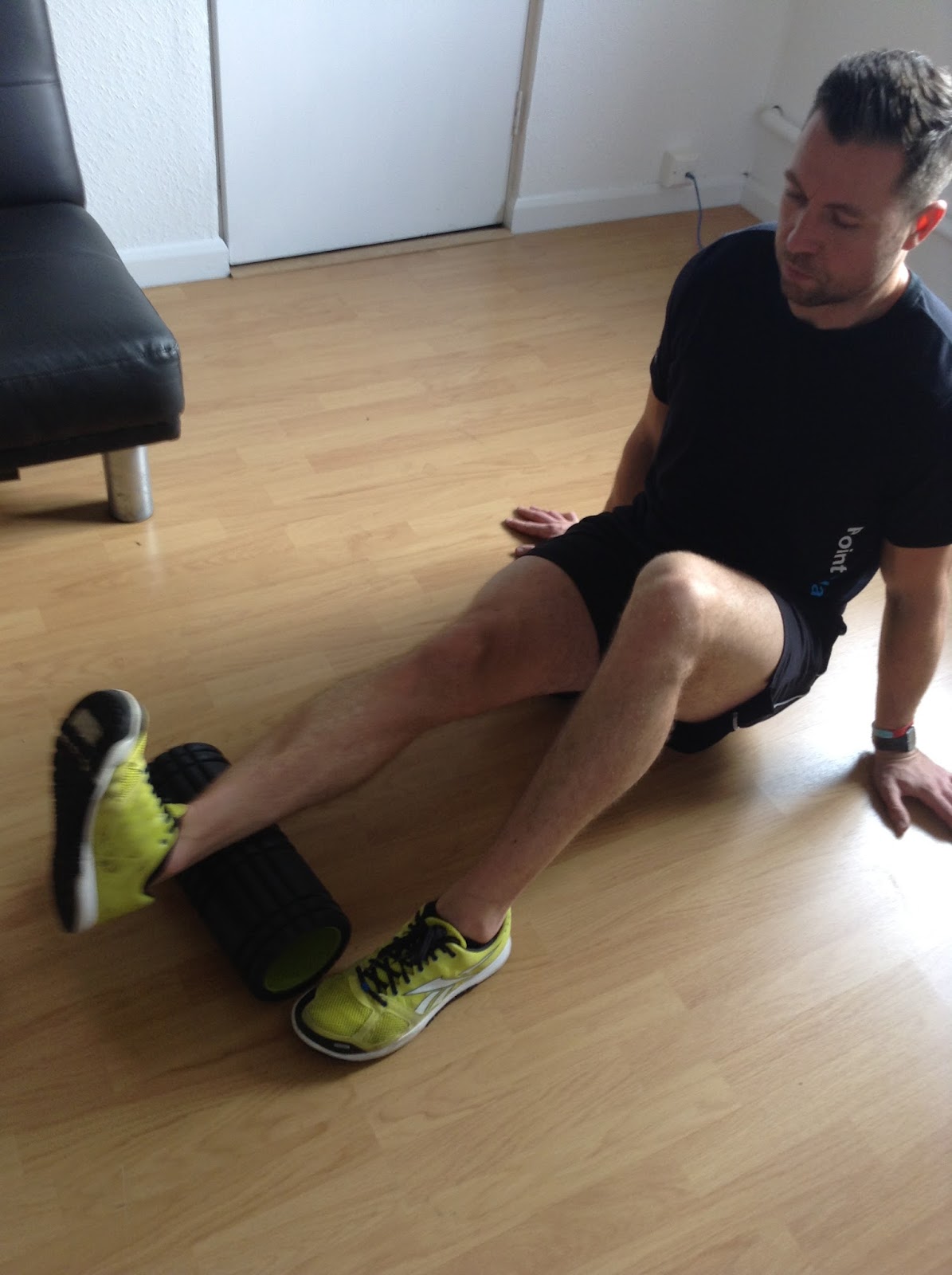
 • Go to a foam rolling/ mobility class. Foam rolling is a self- help tool where you can help de-sensitise the fascia and get rid of those low-level aches and pains.
Foam rolling and mobility class

• Let the therapist handle it. If you think you don’t have the time to do all these self-help tips to keep your fascia healthy. Let me take care of it for you. You can now book myofascial release sessions for the whole body and get everything treated!

To see what else we can help with - click here.

Friday, 20 May 2016

5 Ways To Help Plantar Fasciitis

Have you ever had pain in the arch of your foot? Are you getting pain in the heel when standing all day? Well you may have plantar fasciitis. This is inflammation of the thick connective tissue that runs along the arch of the foot, from your toes to your heel. With prolonged misuse, this tissue can develop small tears and become inflamed and lead to chronic heel pain.

plantar fasciitis

It occurs mainly in runners who increase their mileage too quickly or start running on hard surfaces. Although it can affect others especially those who spend all day on the balls of their feet and using their calf muscles. If the calf and Achilles are not stretched regularly, it can put excessive strain on the plantar fascia. It is important to change your footwear during the week and avoid wearing the same shoes all week. This will stiffen up the ankle joint and cause more issues further down the line. Other athletes involved in sports that require repetitive jumping also have a high risk of developing this injury. 

5 ways to help plantar fasciitis

  1. Take a break from running and jumping. Put your feet and relax! Rest is crucial for recovery of this injury. 
  2. Get some sports massage on the calf muscles and plantar fascia. Use a foam roller on the calves and a trigger point ball on the plantar fascia. Do each muscle 30 seconds at a time and do 3 times a day. Be careful not to overdo it on the pressure though as it will be very painful to begin with. 
  3. Ice will help reduce inflammation and decrease your pain. Use it when you are at home and relaxing, try keeping the foot up too. 
  4. Stretching your calf and Achilles against a wall and on a step will help relieve tension. Stretching your big toe on the wall and then going into a calf stretch will also help relieve some tension in the plantar fascia. 
  5. Consider buying a new pair of shoes that feel COMFORTABLE! Wearing the same shoes all the time is not great for your feet. Also when buying a pair of running shoes, avoid going for the pair of shoes that are for your foot type. Go with a pair that feel comfortable to run in. You will need to go to a shop where you can try a few pairs on and give them a try on their running machine. 

Plantar Fascia Rolling
Calf Foam Rolling

Would you like to feel pain free and comfortable? Want to get back to what you were doing before you had heel pain? Book your HALF PRICE injury consultation here - https://sportscorrectivetherapy.co.uk/contact-us/


Wednesday, 13 April 2016

Effects of Massage in the Workplace

Effects of massage on job performance

The great thing about massage is that it feels awesome, it’s very good for your health and it’s great for business!

Research never lies! Here are a few reasons why massage is good in the workplace, your business and for YOU!


Massage has been shown to decrease cortisol levels in the body, cortisol is known as “the stress hormone”. It helps us deal with stress by shutting down functions that are not a necessity at that specific time, for example, the reproductive system and the immune system. This is so that the body can deal with one stress at a time in short bursts. But as we all know, this isn’t the case as stress can be a chronic problem. Have you noticed the constantly stressed people are always ill? Cortisol helps with making new glucose and the breakdown of glycogen stored in the liver and muscle cells. Cortisol also stops insulin from transporting glucose into cells. So this causes too much glucose in the blood, which makes it impossible to calm the body down. It can also affect bone and muscle growth due to inhibiting the uptake of amino acids into muscle cells which means less fuel going to the muscles. It can affect the formation of bones due to stopping the calcium absorption. So chronically stressed people who want to join the gym should really begin with some massage therapy sessions!

Did you know that massage can cure stress and anxiety? It has been proven that a massage on a regular basis in the long term can increase happy, feel good hormones (dopamine and serotonin) and decrease our over-excited hormones (norepinephrine and epinephrine). If our happy hormones are too low for a long period of time, this can cause depression. If our over-excited hormones are too high it can cause anxiety and panic attacks. So think twice about going to the gym on 3 hours sleep, are you really going to benefit from it? Probably not! Don’t get bogged down with too much project work, it’s best to set yourself realistic goals and use time more efficiently. We’re only human!

So how can massage help people in the workplace?

It helps by keeping those happy hormones happy, this means better blood flow and better movement. This allows for better posture sitting at a desk and less pain in general when moving around too!

There are a number of studies that have demonstrated if the core muscle transverse abdominis is not activated and lacks motor control, this can lead to lumbar spine instability therefore can increase the risk of lower back musculature getting injured or becoming painful. Another study looked at how to decrease this risk of lower back pain by taking the muscles through 3-D movement patterns. It found that people in the workplace who were lifting all day had a lower risk of low back pain if they practiced moving the trunk in 3 different dimensions. They are bending over and arching back, side bending each way and rotating to each side. Have you tried moving in 3D? Try bending forwards, sideways with a slight rotation all at the same time. Videos on our channel coming soon!

So if you want a pain-free, happy driven life then book in your corporate massages now for your employees at 20% off the normal price! They don’t have to be deep they can be soft too! If you're not sure about the corporate deals, then why not try one for HALF PRICE?