Showing posts with label Hamstring Pain. Show all posts

Sunday, 9 April 2017

How to deal with an acute injury

It's all about the M.E.T.H!

RICE (Rest, Ice, Compression and Elevation) is a term that is used to supposedly help with treating sports injuries. Ice has been used for many years and helps to relieve pain from the injured area. But the evidence from Bleakley et al, 2004, found it to have an insignificant effect on soft tissue injuries. Athletes that used ice for longer than 20 minutes then returned to sport afterwards actually would be at a disadvantage due to a decrease in performance (Bleakley et al, 2012). Ice stops the inflammatory process and we need this process to happen to improve the healing of soft tissues. Ice and rest may delay healing time so therefore, we need to do the opposite, movement and heat!

Ice is no good for acute injuries like this ankle sprain!


What is the METH-od then?


MOVEMENT – controlled movement of the injured limb can increase blood flow, improve recovery and decrease the number of misaligned bits of collagen fibres (scar tissue) that is formed during the healing process.

ELEVATION – Bring the injured part higher than the heart to assist the movement and allow gravity to help remove the swelling. This will reduce the pressure of the swollen tissue and reduce pain.

TRACTION – This helps to move the fluid and help take the pressure off the injured part. Depending on where the injured part is, a therapist may have to do this part for you. It can help reduce pain when dealing with muscle spasms and compressed joints.

HEAT – Inflammation is the body’s natural response to injury so by applying heat, this will allow to speed up this process. A study was done on the effects of cold vs heat on people with acute low back pain, they found significant evidence that heat wrap therapy and heated blankets decreased pain immediately after application (French et al, 2006). A smaller study demonstrated the same results where pain from DOMS had decreased and function had improved after wearing heat wraps compared to cold wraps (Mayer et al, 2006). 

A long hot bath can alleviate acute symptoms and can aid in healing soft tissue injuries.


When you damage your tissues either by an injury or through DOMS (delayed-onset-muscle-soreness), you are healed by inflammation and other processes. Your body sends inflammatory cells to the recently damaged tissue to help heal them. These cells are called macrophages and release a hormone called Insulin- like growth factor into the damaged tissues. Applying ice to reduce swelling delays the macrophages from releasing the hormone to help with healing.
Inflammation needs to happen as this is how the body protects itself following an acute soft tissue injury. It does this by removing the damaged tissue and then the healing process can begin. The inflammatory process improves blood and lymphatic flow to and from the injured tissues. This is what helps bring healing nutrients and the chemical mediators to help clear out the damage tissue. Some of these mediators will help limit the amount of swelling, which causes an increase in pain sensitivity. Once this fluid is filled up with waste products, it can then be drained via the lymphatic system. The lymphatic system relies on muscles to contract and relax properly to help flush the waste away.

5 signs of inflammation

1.      Swelling
2.      Redness
3.      Heat
4.      Tenderness
5.      Loss of function

So, RICE isn’t good?


Rest doesn’t inspire tissue repair. Inactivity causes muscle weakness and therefore less lymphatic drainage which will not help in the inflammatory phase of healing. It also causes abnormal scar tissue formation which can cause further issues in the other phases of healing. Cross-friction massage can help with this and can be done by a sports therapist.

There isn’t much scientific evidence that ice helps. Ice slows down the removal of waste products and inhibits the development of new cells. Compression isn’t bad but needs to be done at the right time. Compression can be done by using a voodoo floss band (as used by Dr Kelly Starrett). It has been shown to help remove the blood with the debris and bring fresh new blood with those healing properties to the injured tissue. You can floss any part of the body but will need a Sports Therapist to help with this treatment technique. Here is a video on flossing the knee: 


Take home points

  • Inflammation is a GOOD thing. Without it, there’s no tissue repair.
  • Too much rest causes muscles to waste away. The body needs to undergo a mechanical change by doing exercise.
  • Icing before sports and activity has been shown to have negative effects on sports performance e.g. strength, speed, power and agility.
  • Massage, elevation and compression are effective ways to reduce swelling.


References


Bleakley C, McDonough S, MacAuley D. The use of ice in the treatment of acute soft-tissue injury: a systematic review of randomized controlled trials. Am J Sport Med. 2004; 32:251–261.

Bleakley CM1, Costello JT, Glasgow PD. Should athletes return to sport after applying ice? A systematic review of the effect of local cooling on functional performance. Sports Med. 2012 Jan 1;42(1):69-87.

French SD, Cameron M, Walker BF, Reggars JW, Esterman AJ. A Cochrane review of superficial heat or cold for low back pain. Spine (Phila Pa 1976). 2006 Apr 20;31(9):998-1006.

Mayer JM, Mooney V, Matheson LN, Erasala GN, Verna JL, Udermann BE, Leggett S. Continuous low level heat wrap therapy for the prevention and early phase treatment of delayed-onset muscle soreness of the low back: a randomized controlled trial. Arch Phys Med Rehabil. 2006 Oct;87(10):1310–7.

Thursday, 16 March 2017

The pelvis and its role in functional movement

What is functional movement?

Functional movements are movements based on real life situational biomechanics. For example, squatting and lunging. Your body is an integrated system. This means your muscles do not work in isolation. They work together with other muscles to produce movement. For example, the biceps muscle flexes the elbow, but there will be other muscles acting as synergists (pecs and deltoid muscles) to help control the movement. Other structures in the joint such as ligaments also play a role in helping to create movement by providing stability through certain movement patterns. A dysfunction in these movement patterns can cause a decline in athletic performance and therefore injury and pain.


back pain


4 important sling systems of the pelvic region

1.      Anterior oblique system – external and internal obliques and opposing groins, along with the intervening abdominal fascia. This is involved in stabilisation of the lumbar spine, thoracic spine, rib cage, pubic symphysis, and hips. It also helps with whole body pushing movements and helps transfer forces between the upper and lower body (Lee, 1999).

2.      Posterior oblique system – the lats, thoracolumbar fascia and opposing glute maximus and medius. This involves stabilisation of the lumbar spine and sacro-iliac joints. It helps to turn out the kinetic chain, helps with whole body pulling movements and helps transfer forces between the upper and lower body. This system is most commonly seen in gait because of its fight to control rotation of the pelvis which occurs in the gait cycle (Lee, 1999).

3.      Lateral system – gluteus medius and minimus, groins and opposing QL (lower back muscle). This helps to provide lateral stability in the pelvis, for example, walking and climbing stairs etc. It deals with single leg movement patterns and whole body frontal plane (sideways) movement. It also helps transfer forces between the upper and lower body. A weakness in this system can lead to hip pain, knee pain, ACL injuries and ankle sprains (Lee, 1999).

4.      Deep longitudinal system – spinal erectors (lower back), thoracolumbar fascia via sacrotuberous ligament, biceps femoris (hamstring), head of fibula, peroneals and tibialis anterior (shin muscles). This system helps to create stability of the lumbosacral complex and the foot and arch complex. It helps to control supination and pronation of the foot from heel strike through to mid-stance of the gait cycle. During high intensity activity, it provides a communication for proprioceptive information about ground reaction forces (Lee, 1999).

As a population, the focus is more pointed towards “posterior chain” work because of tight hip flexors and quads. Sometimes, this isn’t the case with athletes and the development of exercise programs should be dealt with more profoundly. Understanding the mechanics of the body is an important part of creating better exercises for better pain free movement.
The components of fitness are extremely important for optimum health. Many people workout to become stronger for their sport, run quicker, lose weight, improve mobility, increase stamina and for the general feel-good factor. These are all great reasons to train, but there is so much more to training then this. We need to think about training our neuromuscular system! What about balance, co-ordination, agility, power and reaction time? These components are just as important as strength training or endurance training. If you do strength training in the gym or you do long runs and keep getting aches and pains, maybe you need to think about adding in some of these to help improve your overall health and fitness.

References:

Lee, Diane, “The Pelvic Girdle: An approach to the examination and treatment of the lumbo-pelvic-hip region”: Churchill Livingstone, 1999, Toronto, Canada

Tuesday, 17 January 2017

FASCIA and why it’s important to YOU!

DO YOU FEEL ACHY AND SORE BUT DON’T KNOW WHAT’S CAUSED IT? 

Fascia is a sheet of connective tissue made up of dense protein fibres. It weaves through the body like a spider’s web and interlinks with just about EVERYTHING! It helps support your bones, muscles, joints, tendons, nerves, ligaments AND organs! You have 6 times more sensory neurons in fascia than any other tissue of the body (except skin). This webbing helps all the body tissues to communicate with each other, for example, that feeling of needing to stretch in the morning or that feeling when you get out of your chair and need to move about. Ideally, your fascia should be supple, can glide, slide and twist easily like thin sheets of rubber. When something goes wrong, signals from the nerve endings are silent and confused and this is when your brain interprets it as pain or discomfort.
Think of fascia like a sponge, when it dries out it goes hard and inelastic. It can be easily broken with a bit of force, for example, twisting your back and bending at the same time to reach for something under the car seat. You haven’t done this movement in ages so all those stiff fascial tissues are more susceptible to pain and discomfort due to being like that hard sponge. We all need to strive for our fascia to be like the wet, hydrated sponge because it has more resilience and flexibility. You can squeeze it and twist it, but it will not break.

 There is a superficial layer that covers fat, nerves, blood vessels and other connective tissue, then there is deep fascia surrounding muscle, muscle sections and individual cells. When fascia becomes hard and thick, this is when trigger points can develop. Trigger points are extremely sore spots in muscles that send pain to other areas of the body. Trigger points are formed by sudden muscle overload, sustained low-level static contractions, eccentric contraction (when a muscle contracts and stretches at the same time), gross trauma, chronic muscle tension, overuse, or a sustained rapid movement. Examples of this can be holding your phone to your ear for too long, typing quickly on a computer keyboard, sitting at a desk with your head too far forwards, repetitive tasks or movements at work, slipping on ice, falling on your shoulder or hip, or simply increasing volume in a short amount of time working out in the gym.

If you are not quite there and not in need of trigger point therapy yet, here are some TOP TIPS on how to keep your fascia hydrated and well! But if you do want a trigger point therapy session then you can find us here.

 • Drink enough water. For every kg of body weight drink 30ml of water. So a 70kg individual will need 2.1 litres of water a day. If exercising, add 0.5-1.0 litres for every hour of exercise.

• Make sure you MOVE differently every day. Vary your gym routine every 6-8 weeks and try a mixture of physical activity e.g. walking, weight training and cardiovascular fitness. Change the intensity of training too.

• You can’t stretch fascia. Ever tried stretching your IT band? Nope, can’t be done! It takes a lot of force to create a stretch. But you can stretch the muscle that fascia can cling on to. Slowly stretch first thing in the mornings before you get up out of bed (check out this video on loosening your back). Stretching is important to help elongate the muscles, so make sure you do a good muscle stretching routine every day.

 • Go to a foam rolling/ mobility class. Foam rolling is a self- help tool where you can help de-sensitise the fascia and get rid of those low-level aches and pains.
Foam rolling and mobility class

• Let the therapist handle it. If you think you don’t have the time to do all these self-help tips to keep your fascia healthy. Let me take care of it for you. You can now book myofascial release sessions for the whole body and get everything treated!

To see what else we can help with - click here.

Friday, 20 May 2016

5 Ways To Help Plantar Fasciitis

Have you ever had pain in the arch of your foot? Are you getting pain in the heel when standing all day? Well you may have plantar fasciitis. This is inflammation of the thick connective tissue that runs along the arch of the foot, from your toes to your heel. With prolonged misuse, this tissue can develop small tears and become inflamed and lead to chronic heel pain.

plantar fasciitis

It occurs mainly in runners who increase their mileage too quickly or start running on hard surfaces. Although it can affect others especially those who spend all day on the balls of their feet and using their calf muscles. If the calf and Achilles are not stretched regularly, it can put excessive strain on the plantar fascia. It is important to change your footwear during the week and avoid wearing the same shoes all week. This will stiffen up the ankle joint and cause more issues further down the line. Other athletes involved in sports that require repetitive jumping also have a high risk of developing this injury. 

5 ways to help plantar fasciitis

  1. Take a break from running and jumping. Put your feet and relax! Rest is crucial for recovery of this injury. 
  2. Get some sports massage on the calf muscles and plantar fascia. Use a foam roller on the calves and a trigger point ball on the plantar fascia. Do each muscle 30 seconds at a time and do 3 times a day. Be careful not to overdo it on the pressure though as it will be very painful to begin with. 
  3. Ice will help reduce inflammation and decrease your pain. Use it when you are at home and relaxing, try keeping the foot up too. 
  4. Stretching your calf and Achilles against a wall and on a step will help relieve tension. Stretching your big toe on the wall and then going into a calf stretch will also help relieve some tension in the plantar fascia. 
  5. Consider buying a new pair of shoes that feel COMFORTABLE! Wearing the same shoes all the time is not great for your feet. Also when buying a pair of running shoes, avoid going for the pair of shoes that are for your foot type. Go with a pair that feel comfortable to run in. You will need to go to a shop where you can try a few pairs on and give them a try on their running machine. 

Plantar Fascia Rolling
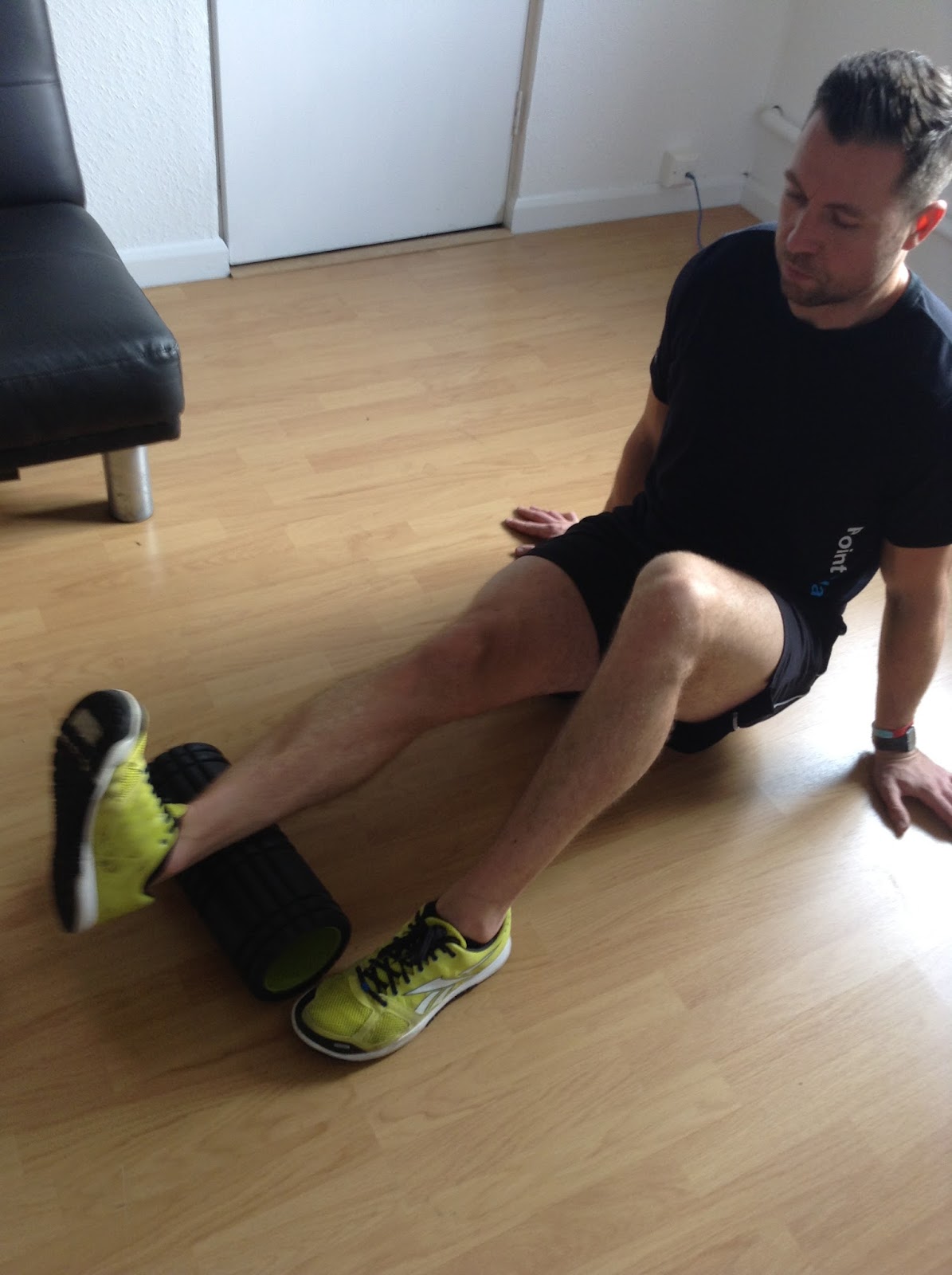
Calf Foam Rolling

Would you like to feel pain free and comfortable? Want to get back to what you were doing before you had heel pain? Book your HALF PRICE injury consultation here - https://sportscorrectivetherapy.co.uk/contact-us/


Wednesday, 13 April 2016

Effects of Massage in the Workplace

Effects of massage on job performance

The great thing about massage is that it feels awesome, it’s very good for your health and it’s great for business!

Research never lies! Here are a few reasons why massage is good in the workplace, your business and for YOU!


Massage has been shown to decrease cortisol levels in the body, cortisol is known as “the stress hormone”. It helps us deal with stress by shutting down functions that are not a necessity at that specific time, for example, the reproductive system and the immune system. This is so that the body can deal with one stress at a time in short bursts. But as we all know, this isn’t the case as stress can be a chronic problem. Have you noticed the constantly stressed people are always ill? Cortisol helps with making new glucose and the breakdown of glycogen stored in the liver and muscle cells. Cortisol also stops insulin from transporting glucose into cells. So this causes too much glucose in the blood, which makes it impossible to calm the body down. It can also affect bone and muscle growth due to inhibiting the uptake of amino acids into muscle cells which means less fuel going to the muscles. It can affect the formation of bones due to stopping the calcium absorption. So chronically stressed people who want to join the gym should really begin with some massage therapy sessions!

Did you know that massage can cure stress and anxiety? It has been proven that a massage on a regular basis in the long term can increase happy, feel good hormones (dopamine and serotonin) and decrease our over-excited hormones (norepinephrine and epinephrine). If our happy hormones are too low for a long period of time, this can cause depression. If our over-excited hormones are too high it can cause anxiety and panic attacks. So think twice about going to the gym on 3 hours sleep, are you really going to benefit from it? Probably not! Don’t get bogged down with too much project work, it’s best to set yourself realistic goals and use time more efficiently. We’re only human!

So how can massage help people in the workplace?

It helps by keeping those happy hormones happy, this means better blood flow and better movement. This allows for better posture sitting at a desk and less pain in general when moving around too!

There are a number of studies that have demonstrated if the core muscle transverse abdominis is not activated and lacks motor control, this can lead to lumbar spine instability therefore can increase the risk of lower back musculature getting injured or becoming painful. Another study looked at how to decrease this risk of lower back pain by taking the muscles through 3-D movement patterns. It found that people in the workplace who were lifting all day had a lower risk of low back pain if they practiced moving the trunk in 3 different dimensions. They are bending over and arching back, side bending each way and rotating to each side. Have you tried moving in 3D? Try bending forwards, sideways with a slight rotation all at the same time. Videos on our channel coming soon!

So if you want a pain-free, happy driven life then book in your corporate massages now for your employees at 20% off the normal price! They don’t have to be deep they can be soft too! If you're not sure about the corporate deals, then why not try one for HALF PRICE? 

Thursday, 17 March 2016

Recurrent Hamstring and Calf Strains when Running?

Runners quite frequently suffer from reoccurring strains, cramps, spasms in their calves and hamstrings. Sometimes you can fix it with massage and stretching exercises but what if it keeps coming back and causes problems in your training? Or even worse hinders your running performance?


Well it could be due to a tight sciatic nerve! If a muscle stretches or cramps to the point where it feels like it is going to tear, it is most probably neutrally tight. This is a protective mechanism the body follows to allow us to realise that something has gone wrong. Pain is a warning system that a tissue is going to be damaged if we don’t do something about it. This is why neurological tightness happens. If we start mobilising the nerves, then this can help release tension in the muscles and will reduce the risk of injury.


Tight calves also cause pronation. If there is limited dorsiflexion at the ankle joint it has to come from somewhere else, for example the sub-talar joint. This can also cause shin pain, Achilles pain and knee pain. So by moving the sciatic nerve and releasing the calves through some self-myofascial release can help prevent all this from occurring. Foam rolling the calves is good, but sometimes to get the neural tension, it is better to hold a tender spot and relax on it for a minute or so until the pain dissipates. 


For those of you who cramp up in your hamstrings, it has been proven that releasing your plantar fascia can help. If this fascia becomes rigid, it can release the connective tissue further up the body. Think of the body’s fascia as a train track, if one part of the track is broken, the other bits won’t work efficiently and the train will crash! The muscles have a strong connective tissue called fascia that (I like to think of it as very thick skin!), that is a network all the way from your head to your toes. So if you have thick skin in the foot this will limit the amount of movement you have not only in your hamstrings but your calf too. It is all linked! A way of releasing your plantar fascia off is using a hard ball and standing on it. You can also release the hamstrings too in the same way. I usually hold the ball into a tender area of the muscle and hold the pressure until the pain subsides, then I move onto another trigger point.


So here it is, some good tips on how to release the neural tension from your calves and hamstrings by mobilising the sciatic nerve and doing some self-myofascial release. The body is very complex, so if this doesn’t work for you, it may be due to a biomechanical issue involved in your running technique. For example, a rotated pelvis can cause all sorts of problems with the upper and lower body. It is always best to get help when picking up an injury as us Sports Therapists can do all the necessary assessments involved in the gait cycle and functional movements. So if you are in pain, do not ignore it, book in to see a Sports Therapist and get pain free now!


Hands on Therapy that gets Results